


When I conducted user research on 5 different women (ages 25-32) who had gone through the diagnosis process, I identified a gap in how women with ADHD communicate with doctors— going off of memory alone was not enough when making accurate self-reportings during diagnosis; leaving them undiagnosed.
User interviews revealed a clear need: women with ADHD often struggle to recall relevant behaviours when speaking to their doctors, adding stress and making it harder to get a proper diagnosis. By aligning this pain point with the product opportunity, we identified a solution—a self-reflection tool that offloads memory demands by documenting symptoms over time. This insight directly informed the development of a storyboard and user flow, laying the foundation for the ideation and prototype phase.
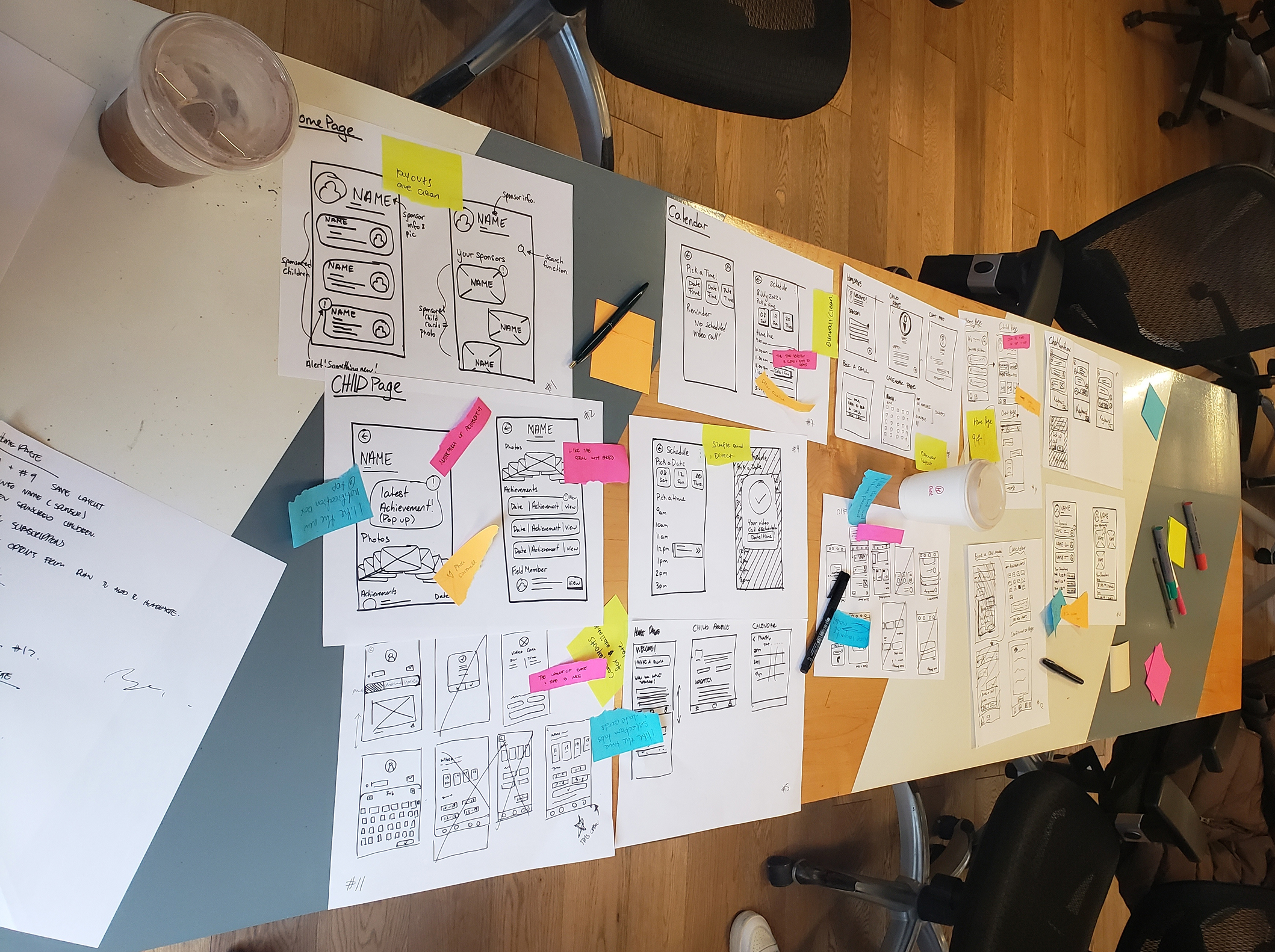
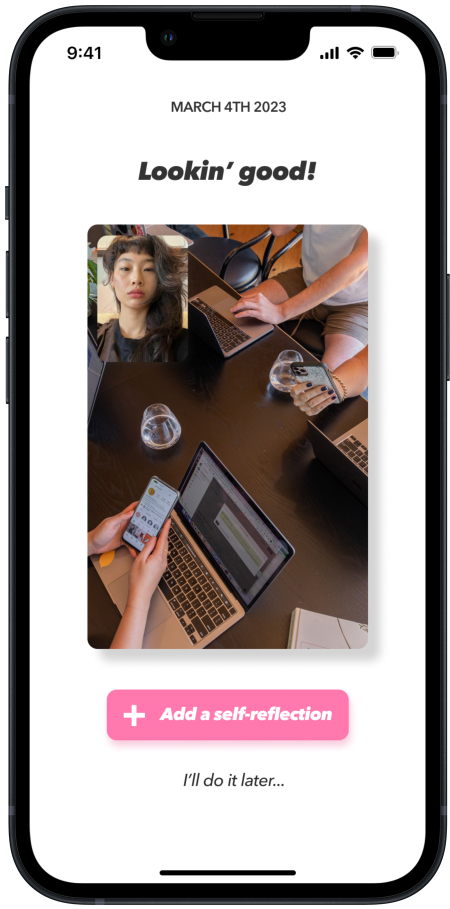
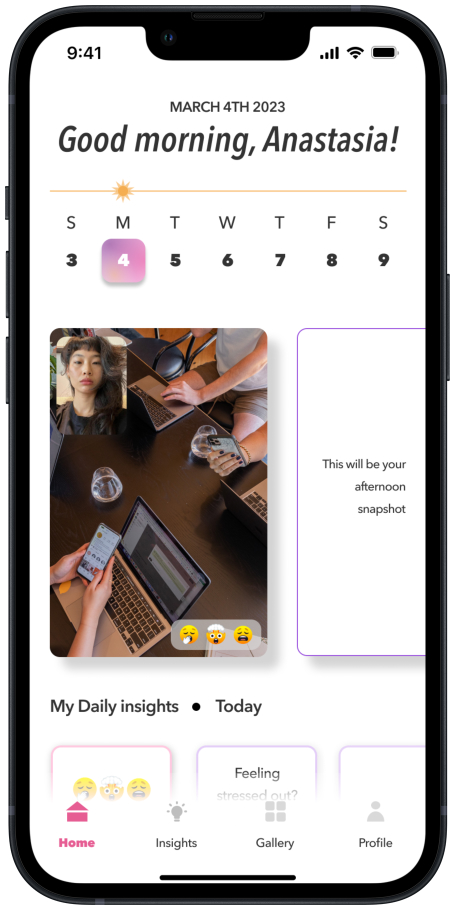
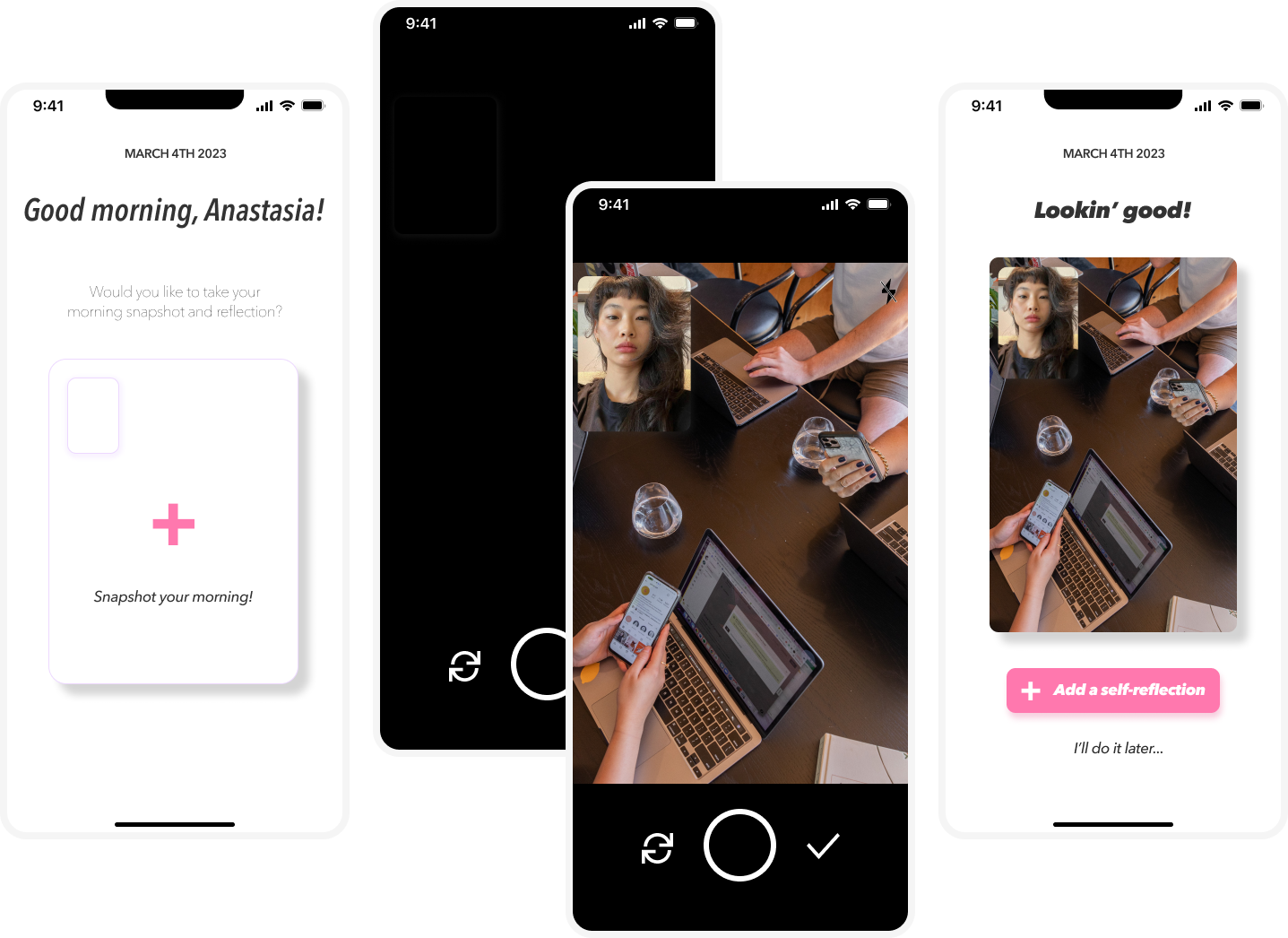
To make the self-reflection feel more personal and engaging, I introduced a photo feature inspired by BeReal’s spontaneous photo concept. Users can attach a photo to their daily reflection, creating a stronger emotional connection to their experience. This simple moment of delight adds an element of fun and authenticity while supporting deeper memory recall. It encourages repeat use, strengthens user loyalty, and differentiates the app by making emotional reflection more creative, spontaneous, and habit-forming.
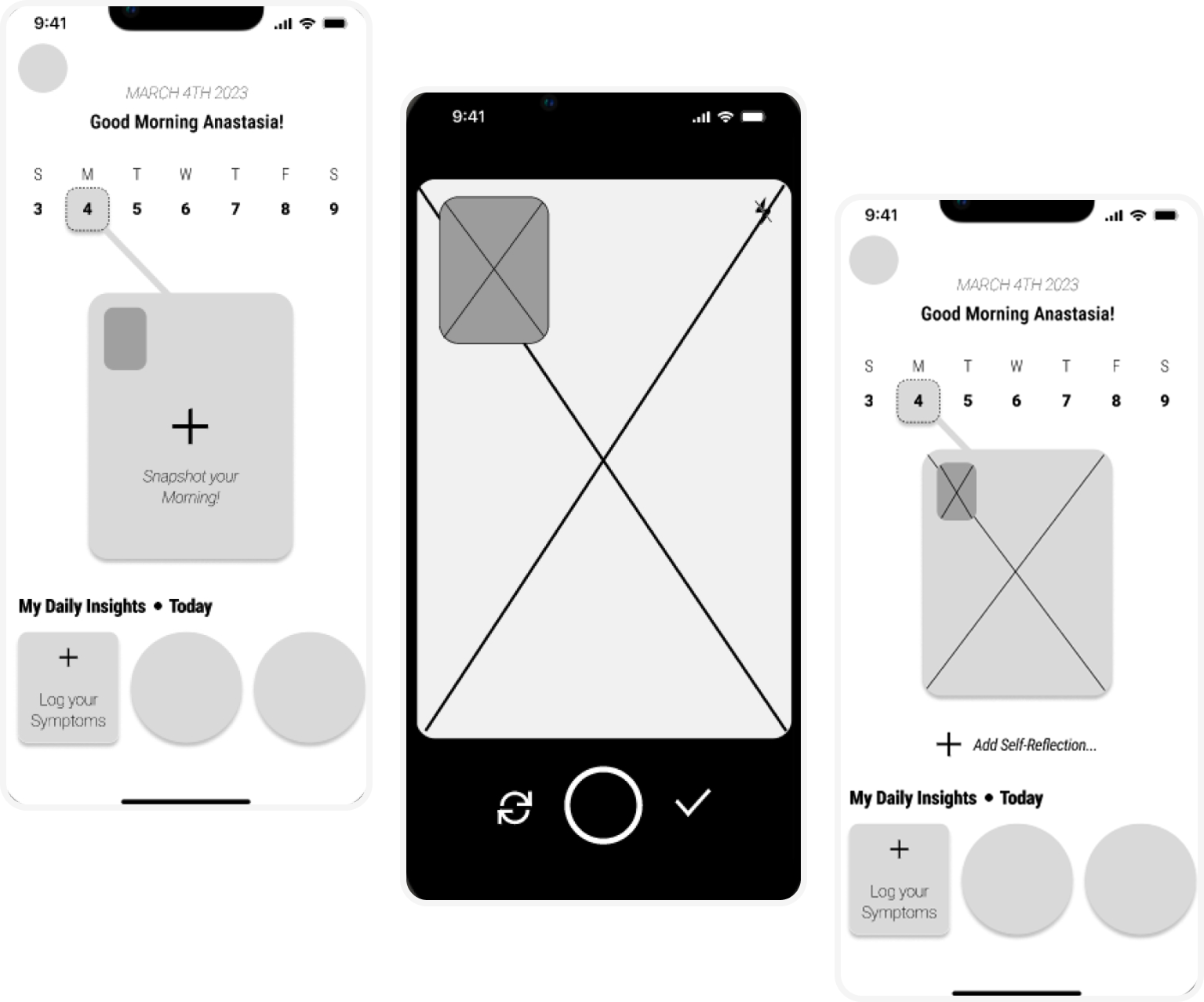

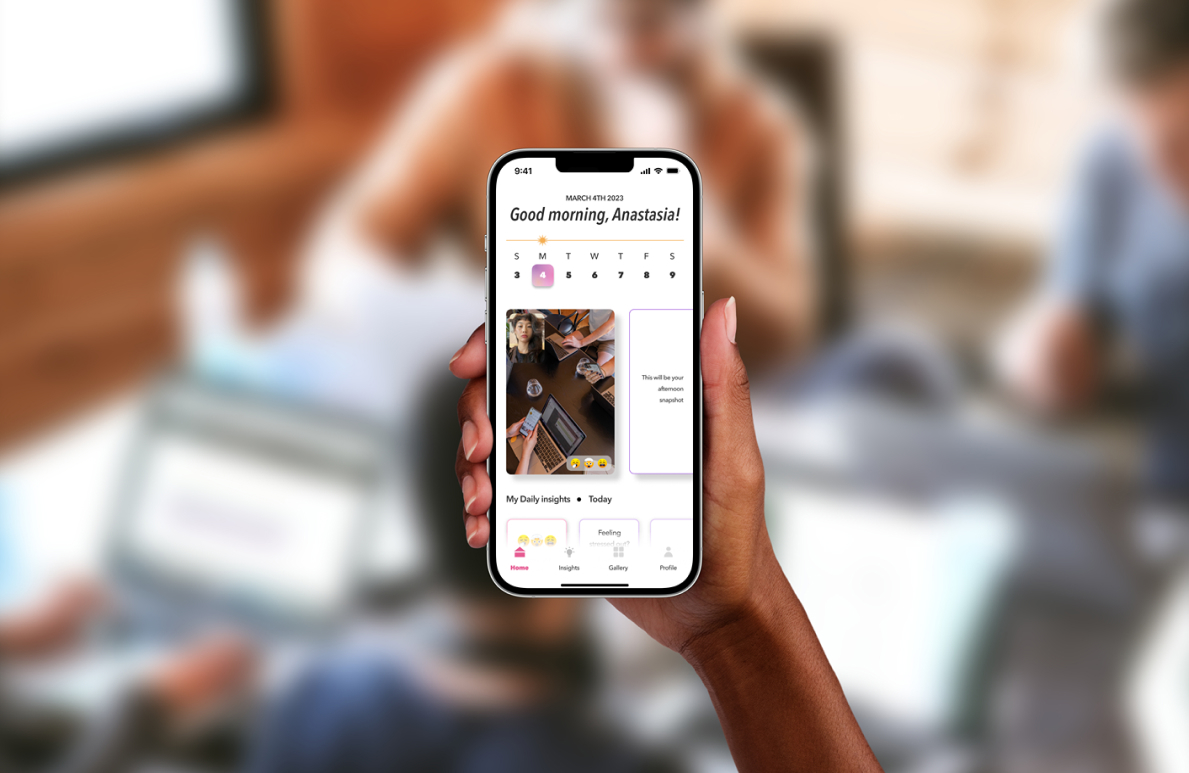
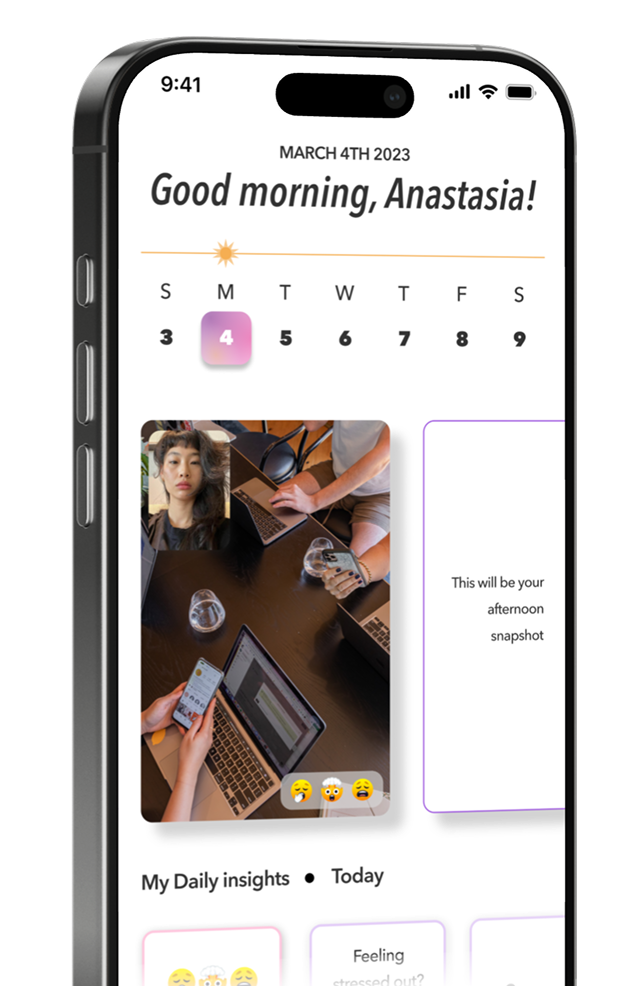
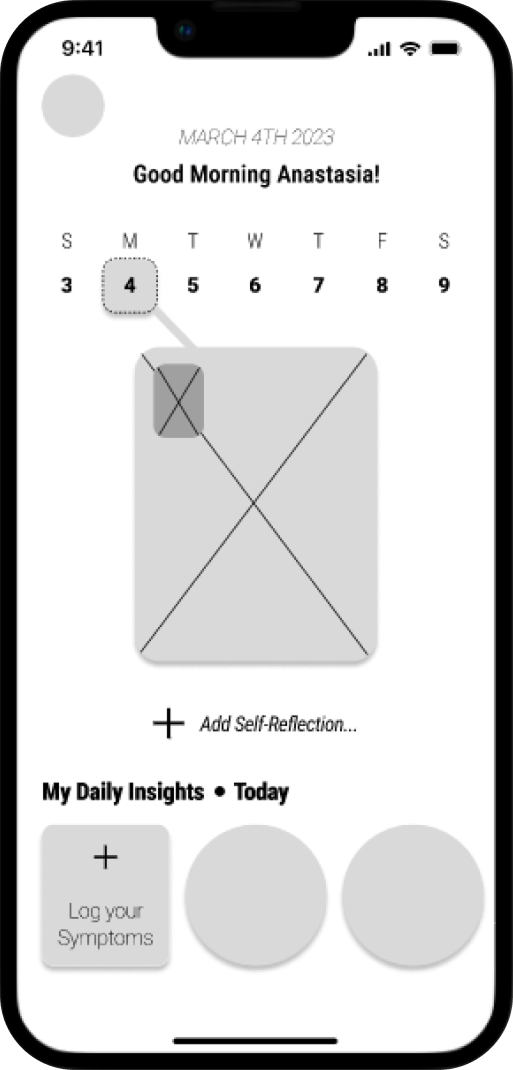
To support a more meaningful and intuitive user experience, I introduced a personalized dashboard that adapts to each user’s journey. By surfacing relevant content and actions at the right time, users feel seen and understood—reducing cognitive load and encouraging continued engagement. Personalization also builds a stronger emotional connection with the product, fostering trust and long-term retention. Inspired by Flo’s privacy-conscious design, the dashboard feels familiar and supportive for women and girls—opening the door to future features like shareable visual insights.



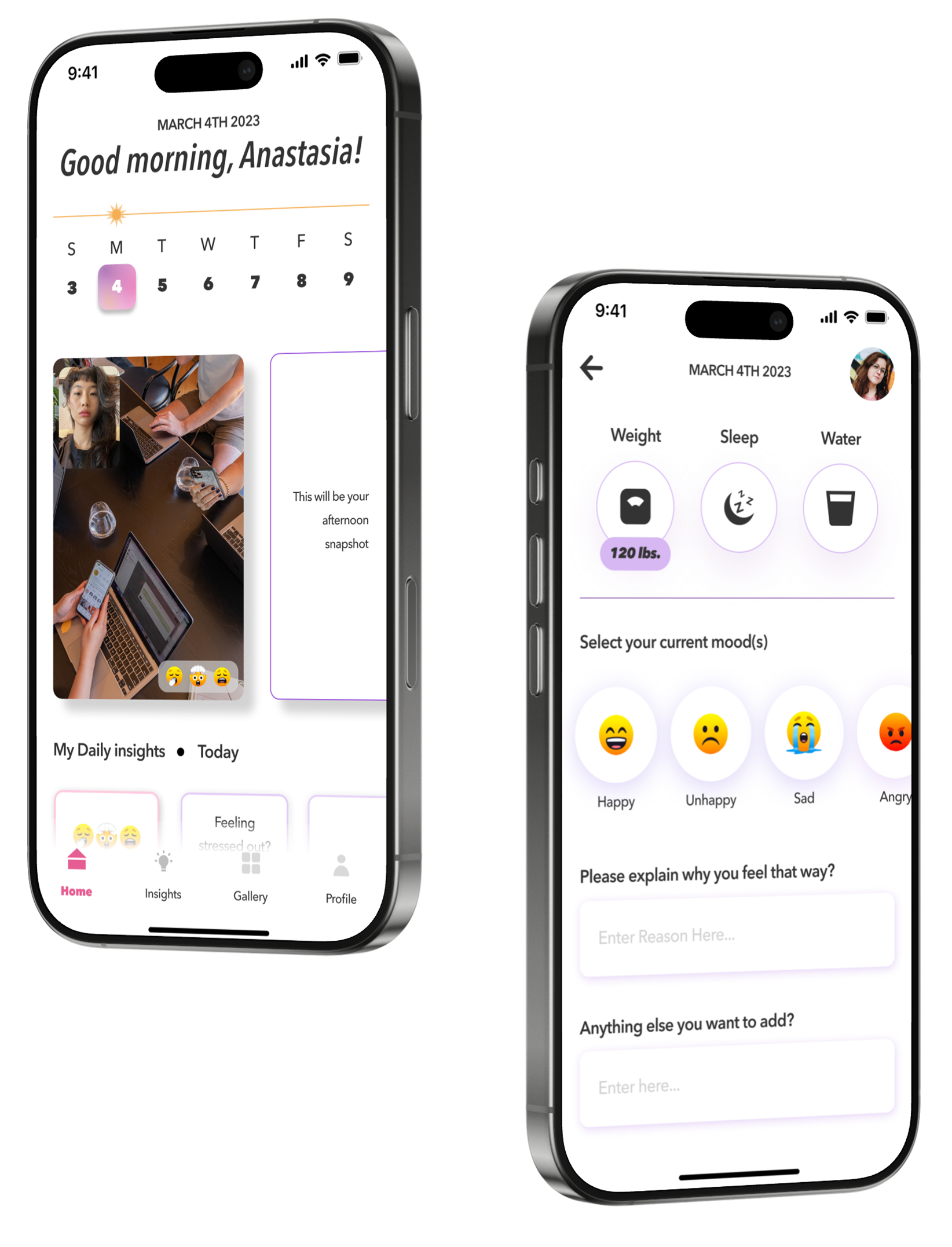
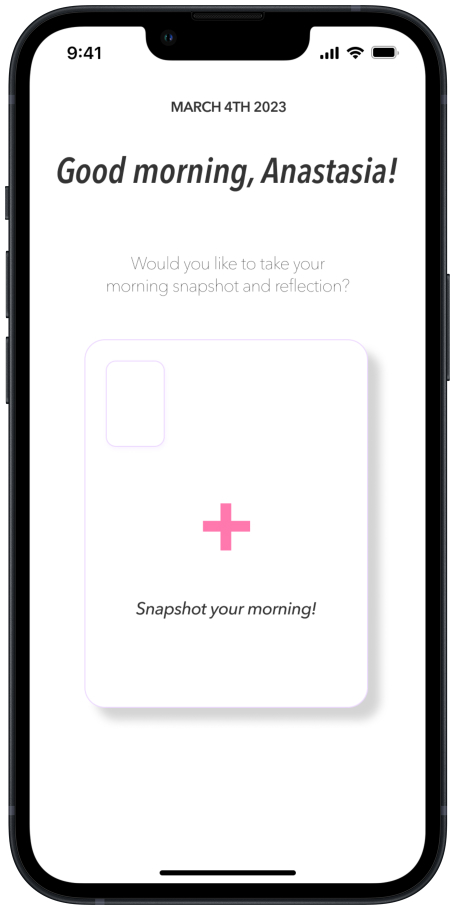
Whatever users are doing at the time, go ahead and capture that moment! You would receive a notification every morning and evening. Tapping on the notification would bring you to the on-boarding screen to start your reflection.
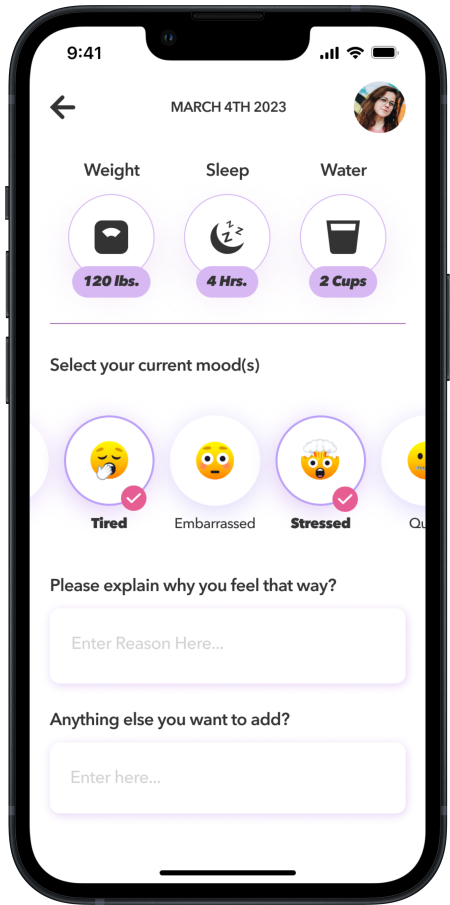
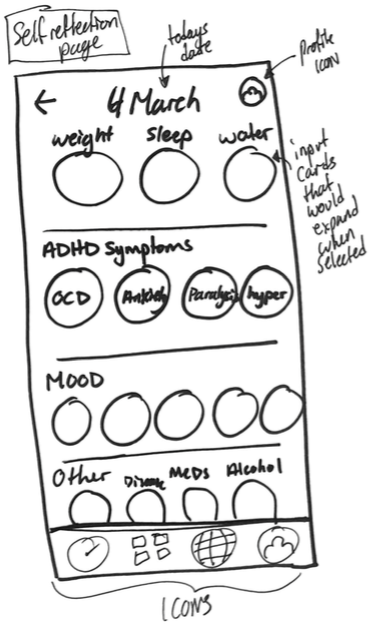
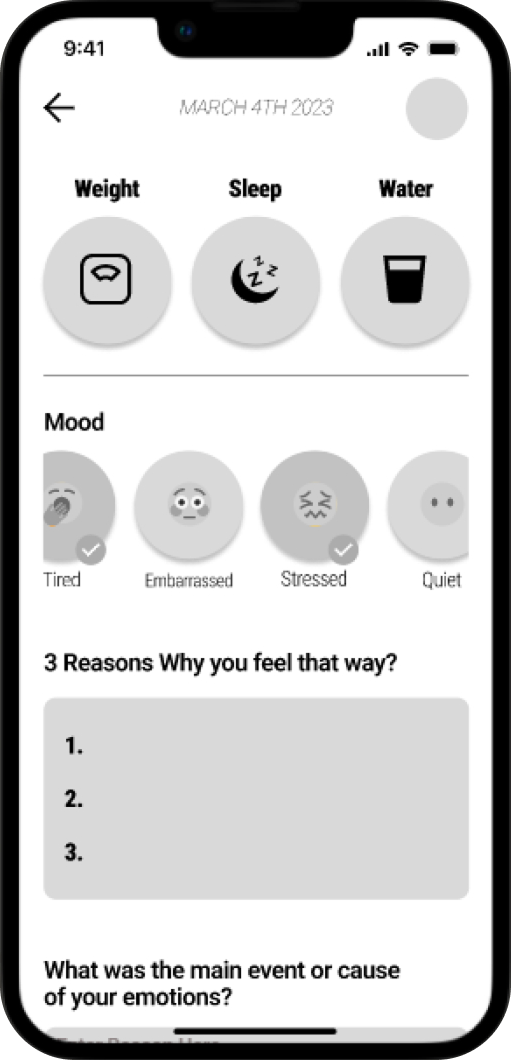
After taking a photo, users can add a mood-based reflection and optionally expand with personal notes like, “I’m feeling overwhelmed and turned to my phone to calm down.”
After taking a photo, users can add a mood-based reflection and optionally expand with personal notes like, “I’m feeling overwhelmed and turned to my phone to calm down.”